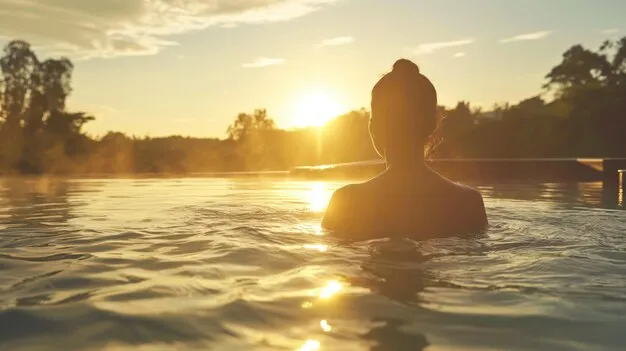
Skip the Sports Drink: How Soaking in Mineral-Rich Water Feeds Your Body What Supplements Can't
Walk down any grocery store aisle in America and you'll find an entire wall dedicated to electrolyte products. Powders, tablets, canned drinks, gummies — all promising to fix what your body is supposedly missing. And yet, despite all of that, chronic mineral deficiency is still rampant. Fatigue, muscle cramps, brain fog, irregular sleep — sound familiar? There's a good chance your gut is part of the problem, and no amount of flavored powder is going to fix that.
Here at AquaLife Bulgaria, we've spent years watching people arrive exhausted and depleted, convinced they just needed to drink more water or try a new supplement stack. What they actually needed was to soak.
The Gut Bottleneck Nobody Talks About
When you swallow an electrolyte drink, it goes through a long, complicated journey before any of it actually reaches your cells. Your stomach acid, intestinal lining, absorption efficiency, gut microbiome health — all of these factors act as gatekeepers. For a lot of people, particularly those dealing with inflammation, leaky gut, or digestive stress, that journey results in significant mineral loss before absorption even happens.
Magnesium is probably the best example. It's one of the most critical minerals in the human body — involved in over 300 enzymatic processes — and it's also notoriously difficult to absorb orally. High-dose magnesium supplements are famous for causing digestive upset precisely because unabsorbed magnesium draws water into the colon. Your body literally flushes out what it couldn't use.
Transdermal absorption sidesteps that whole system. When you immerse yourself in mineral-rich water, your skin — the body's largest organ — acts as a direct delivery mechanism. Minerals like magnesium, sulfur, calcium, and potassium can pass through the skin's lipid barrier and enter the bloodstream without touching your digestive tract at all.
What Makes Bulgarian Thermal Water Different
Not all mineral water is created equal. The thermal springs in Bulgaria — particularly those in regions like Velingrad, Bankya, and Hisarya — have been geologically active for thousands of years. Water that falls as rain filters through layers of rock over decades, sometimes centuries, picking up a dense mineral profile before it resurfaces as a hot spring.
The mineral composition of these waters typically includes magnesium bicarbonate, calcium, sodium, sulfates, and trace elements like silica and fluoride. The concentrations aren't arbitrary — they reflect the specific geology of the region and have been studied by European balneologists (that's the science of therapeutic bathing, in case you haven't come across the term) for generations.
The temperature matters too. Bulgarian thermal springs typically range between 95°F and 115°F, and that warmth isn't just comfortable — it's functional. Heat causes vasodilation, opening up capillaries near the skin's surface and essentially increasing the surface area available for mineral uptake. You're not just soaking passively. Your body is actively drawing in what the water offers.
The 20-Minute Threshold
Research on transdermal magnesium absorption — including a frequently cited study from the University of Birmingham — found measurable increases in both blood and urine magnesium levels following mineral bath immersion. The sweet spot appears to be around 20 minutes at temperatures between 100°F and 107°F. Below that threshold, absorption is minimal. Beyond 30 to 35 minutes, your body's skin barrier begins to rehydrate and close off, reducing further uptake.
This is why Bulgarian spa protocols aren't just about relaxation (though that's a welcome side effect). They're structured. Soak times, temperatures, and mineral concentrations are calibrated for therapeutic outcomes — not just a pleasant afternoon.
At AquaLife Bulgaria, we follow these same principles. The experience is designed to feel effortless, but there's a lot of intentional science running underneath it.
Comparing Your Options: Powder vs. Pool
Let's be honest — electrolyte drinks have a place. If you're in the middle of a long run or recovering from a stomach bug, a quick-dissolving electrolyte tablet is practical and fast. We're not here to tell you to throw your Liquid IV in the trash.
But as a primary strategy for chronic mineral replenishment? The limitations are real:
- Bioavailability varies wildly depending on the form of mineral used. Magnesium oxide (common in cheap supplements) absorbs at around 4%. Magnesium glycinate does better, but still has to clear your gut.
- Synthetic formulations are narrow. Most commercial electrolyte products focus on sodium, potassium, and maybe magnesium. Natural thermal water delivers a broader spectrum of trace minerals that work synergistically in ways that isolated compounds can't replicate.
- Cumulative gut stress. For people with sensitive digestion, daily high-dose mineral supplementation can cause ongoing irritation — the opposite of what you're going for.
Transdermal mineral therapy through thermal soaking doesn't ask anything of your digestive system. It's a parallel pathway, and for many people, it's a more efficient one.
What You Can Do Right Now
If a trip to Bulgaria isn't in your immediate plans, you can still experiment with transdermal mineral absorption at home. Epsom salt baths (magnesium sulfate) are the most accessible starting point. Use about two cups in a standard bathtub, water temperature around 102°F to 106°F, and soak for 20 minutes. It's not the same as a naturally occurring thermal spring — the mineral complexity is far simpler — but it's a meaningful step in the right direction.
For those who want the real thing, the experience of immersing in a geothermal spring with a full mineral profile is genuinely different. The water feels different against your skin. The depth of relaxation hits differently. And the recovery effects — reduced muscle tension, improved sleep, steadier energy — tend to show up within 24 to 48 hours in ways that a magnesium tablet rarely delivers.
Healing the Gap
The mineral gap in American health isn't going to be solved by a better-tasting powder. It's a structural problem — one that requires rethinking how we deliver nutrients to the body, not just which nutrients we're targeting.
Bulgarian balneology figured this out a long time ago. The thermal springs here weren't just bathing spots — they were (and still are) medical facilities, used by doctors to treat everything from musculoskeletal disorders to metabolic conditions. The science has always been there. Americans are just now starting to catch up.
Your skin is ready to do the work. Sometimes the most effective thing you can do is stop swallowing and start soaking.