Your Brain on Warm Water: The Neuroscience Behind Why Thermal Bathing Hits Different Than Any Supplement
Let's be honest about where a lot of Americans are right now. Tired in a way that sleep doesn't fix. Motivated in theory but flat in practice. Reaching for another coffee at 2pm not because you're sleepy but because you genuinely need something to feel like yourself again. The clinical term for this state is often burnout. The lived experience is more like a dimmer switch that someone slowly turned down on your life.
The wellness industry has plenty of answers for this — adaptogens, nootropics, dopamine detox protocols, cold plunge subscriptions. Some of it helps. A lot of it is noise. What rarely gets discussed in these conversations is one of the most neurologically compelling interventions available: deliberate thermal water immersion. Not just soaking in a hot tub. Something more specific, more intentional, and far more rooted in biology than most people realize.
Bulgaria has been doing this for centuries. The science is finally catching up to explain why.
The Dopamine Problem Nobody's Diagnosing Correctly
Dopamine has a bit of a PR problem. Most people think of it as the "pleasure chemical" — the reward hit you get from a good meal, a social media like, or finishing a project. But dopamine's real job is more nuanced and more important than that.
Dopamine is fundamentally a motivation and anticipation molecule. It's what generates the drive to pursue, to engage, to feel like effort is worth making. When dopamine signaling is healthy, life has texture. When it's dysregulated — and chronic stress is one of the most reliable ways to dysregulate it — everything feels slightly gray. Tasks feel heavier than they are. Pleasure feels muted. The gap between knowing what you should do and actually doing it widens into something that feels embarrassingly unbridgeable.
Chronically elevated cortisol, the primary stress hormone, directly suppresses dopaminergic activity. This is why burnout doesn't feel like sadness exactly — it feels more like a loss of signal. The wanting is gone. And in a culture that runs on perpetual urgency, high stimulation, and digital overstimulation, dopamine dysregulation isn't a fringe issue. It's the default state for a significant portion of working adults.
What Happens to Your Brain in Thermal Water
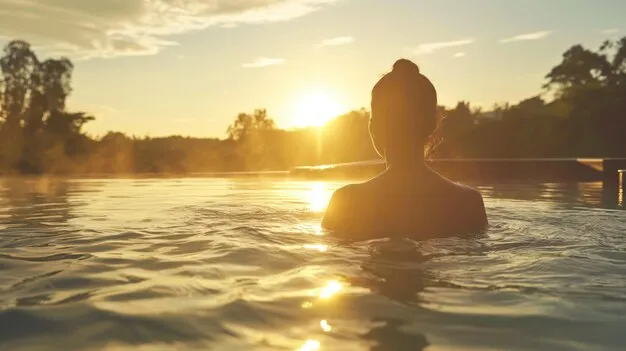
When you immerse your body in warm mineral water — and we're talking about a specific range here, roughly 98–104°F — a cascade of neurological events begins that is genuinely remarkable in its scope.
First, the peripheral nervous system begins to downregulate. The warm water activates thermoreceptors in the skin that send signals directly to the hypothalamus, the brain's central thermostat and stress-response hub. This triggers a parasympathetic shift — a move away from the fight-or-flight state that most of us are stuck in and toward the rest-and-digest state that the body needs to actually repair and recalibrate. Cortisol begins to drop. Heart rate slows. Muscle tension releases not just physically but neurologically, as the feedback loop between tense muscles and an anxious brain starts to quiet.
Second — and this is where it gets interesting — warm water immersion has been shown in multiple studies to increase beta-endorphin release and, critically, to stimulate dopaminergic pathways in the brain's reward circuitry. This isn't a vague, feel-good effect. Research on hydrotherapy and thermal immersion has documented measurable increases in dopamine and serotonin metabolites following sessions, with effects that outlast the immersion itself by hours.
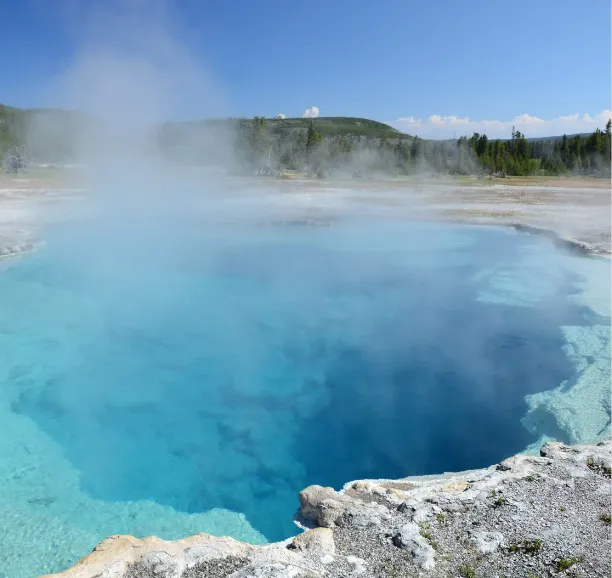
The mineral composition of the water matters here too. Bulgarian thermal springs are notably rich in magnesium, which is absorbed transdermally during immersion. Magnesium plays a direct role in regulating NMDA receptors — the same receptors that ketamine targets in its rapid antidepressant effect. It also acts as a cofactor in the synthesis of both serotonin and dopamine. You're not just soaking. You're delivering neurochemical raw materials through your skin.
The Temperature Sequence Protocol: Why Ritual Matters
Bulgarian thermal bathing isn't a passive activity. The traditional approach involves a deliberate sequence of temperatures — warm immersion, followed by a period of neutral-temperature rest, followed by optional cool exposure — that mirrors what neuroscientists now call "thermal allostasis," the brain's process of adapting to and recovering from controlled temperature stress.
The warm phase suppresses the threat-detection systems of the brain and creates the parasympathetic window described above. The rest phase allows the nervous system to consolidate that shift rather than snapping back immediately to baseline. The cool exposure — brief and controlled, not the jarring cold-plunge shock that's been trending — triggers a norepinephrine release that sharpens mental clarity and generates the alert-but-calm state that most of us are trying to manufacture with caffeine.
That sequence — release, consolidate, sharpen — is essentially a manual reset for a dysregulated nervous system. And when it's performed in mineral-rich water, with the added benefit of magnesium and sulfur absorption, the neurological effects are compounded in ways that no single supplement can replicate because no supplement addresses all these pathways simultaneously.
The duration matters too. Bulgarian protocols typically recommend a minimum of 20 minutes in the warm phase for full parasympathetic engagement. Less than that and you're getting relaxation. More than that — in the 20–40 minute range — and you're getting the deeper neurochemical shifts that affect mood, motivation, and cognitive clarity for hours afterward.
Neuroplasticity and the Long Game
Here's what makes regular thermal bathing more interesting than a one-time mood boost: the concept of neuroplasticity. The brain changes in response to repeated experiences. Every time you trigger the parasympathetic state deliberately, you're reinforcing the neural pathways that make that state more accessible. Every time you generate a dopaminergic response through a non-stimulant, non-addictive activity, you're strengthening the reward circuitry that makes motivation feel natural rather than forced.
This is why people who maintain consistent thermal bathing practices — whether in Bulgarian spa towns or in thoughtfully designed aquatic wellness centers — often report that the effects accumulate over time. The first few sessions feel like relief. After weeks of regular practice, the baseline shifts. The dimmer switch starts moving back up.
For burned-out professionals and anyone navigating the grinding mental fatigue that's become almost normalized in American work culture, this is a meaningful distinction. You're not just managing symptoms with each session. You're gradually rebuilding the neurological architecture that symptoms were eroding.
Bringing the Bulgarian Approach Home
The full experience of Bulgaria's thermal regions — the mineral-saturated waters of Velingrad, the ancient Roman-era baths of Hisarya, the mountain-spring spas of Bankya — is something that's genuinely worth seeking out if you have the opportunity. The mineral profiles of those waters have been shaped by volcanic geology over millions of years, and they're not easily replicated.
But the principles are portable. Warm mineral baths at home using magnesium flakes or Epsom salts approximate some of the mineral absorption benefits. Deliberate temperature sequencing in a shower — warm for 15–20 minutes, followed by a brief cool rinse — engages the same neurological mechanisms. The key is intentionality and consistency. This isn't a once-in-a-while treat. It's a practice.
Your brain doesn't need more stimulation. It needs the opposite — a reliable, repeatable signal that it's safe to downregulate, recover, and rebuild. Warm water, mineral-rich and deliberately applied, has been delivering that signal to human nervous systems for a very long time.
The neuroscience just finally has the vocabulary to explain what Bulgarian bathers already knew.