Breathe, Float, Reset: The Bulgarian Water Meditation Method That's Helping Burned-Out Americans Finally Decompress
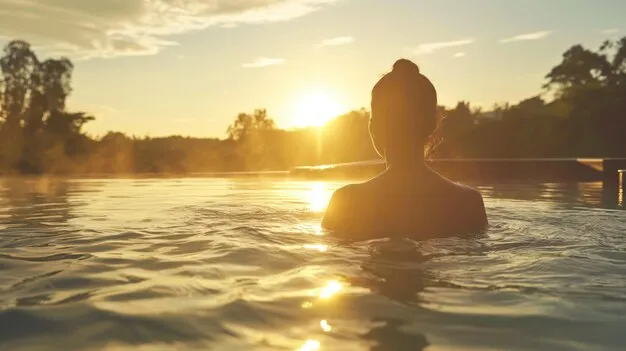
Photo: peaceful woman floating in warm mineral pool spa relaxation breathwork, via img.freepik.com
You've probably tried at least one breathing app. Maybe you've done a guided meditation on a lunch break, or taken a yoga class specifically because someone told you it would help with stress. And maybe it helped a little — for a while. But for a lot of Americans grinding through high-pressure careers, the relief never quite sticks.
What if the missing ingredient wasn't the breath itself, but the environment around it?
That's the premise behind a practice that Bulgarian spa therapists have been quietly refining for generations — one that combines intentional breathwork with water immersion in a way that doesn't just calm the mind, but physically shifts the body's stress chemistry. And increasingly, it's finding an audience among American professionals who've tried everything else.
Where This Practice Comes From
Bulgaria has a long and genuinely fascinating relationship with water as medicine. The country sits on one of Europe's richest networks of mineral springs, and bathing culture there isn't just recreational — it's woven into the healthcare system. Bulgarian balneology (the medical study of therapeutic bathing) dates back centuries, and many of the country's traditional spa practices blend hydrotherapy with elements drawn from Balkan folk healing traditions.
The breathing technique we're describing here — sometimes called vodna meditatsiya in Bulgarian, loosely translated as "water meditation" — isn't a branded wellness product. It's a practice that evolved organically in spa settings, passed down through generations of therapists who noticed that clients who breathed in specific patterns during immersion sessions recovered faster, slept better, and reported dramatically lower anxiety levels.
"We never called it anything fancy," says Nikoleta Stoyanova, a senior hydrotherapist at a wellness center in the Plovdiv region who has been teaching the technique to international guests for over a decade. "It was just what we did. You adjust the breath, you adjust the water, and the body does the rest. It took Western scientists a while to explain why it works, but we already knew that it did."
The Neuroscience Behind Water and Breath
Here's what the research actually says, because this isn't just vibes.
When the human face — specifically the area around the nose and forehead — comes into contact with cool water, it triggers what physiologists call the mammalian dive reflex. Heart rate slows. Blood redistributes toward the core and vital organs. The parasympathetic nervous system — your rest-and-digest mode — gets activated almost involuntarily. It's one of the fastest ways to physiologically interrupt a stress response.
Now layer intentional breathing on top of that. Extended exhales (longer out-breaths relative to in-breaths) are well-documented as a direct lever on the vagus nerve — the neural superhighway that connects your brain to your heart, lungs, and gut. Extended exhale patterns increase heart rate variability (HRV), which is essentially a measure of how adaptable and resilient your nervous system is. Low HRV is strongly associated with chronic stress, burnout, and anxiety disorders.
Combine the dive reflex with extended exhale breathing during water immersion, and you're essentially hitting the nervous system's reset button from two directions simultaneously. Cortisol drops. Tension releases. The mental chatter quiets.
The Practice: A Step-by-Step Guide
The good news is that you don't need to book a flight to Bulgaria to try this. A bathtub works. A pool works better. Here's how to do it.
What you'll need: A bathtub filled with comfortably warm water (around 92–96°F), or access to a pool. A quiet space. About 20 minutes.
Step 1: Settle and arrive. Lower yourself into the water slowly and spend two to three minutes just breathing normally. Let your body adjust to the temperature. Don't rush this part — you're giving your nervous system permission to shift gears.
Step 2: Begin the 4-7-8 pattern, modified for water. Inhale through the nose for a count of four. Hold gently for a count of four. Exhale slowly through slightly parted lips for a count of eight. The extended exhale is the key mechanism here. Repeat this cycle six to eight times.
Step 3: The face dip (optional but powerful). If you're comfortable, lower your face — just the forehead and nose — into the water on your exhale. Keep your mouth closed. Hold for the count of your exhale, then lift and inhale. This is where the dive reflex kicks in. If this feels uncomfortable, skip it and simply focus on the breathing pattern while fully submerged to the shoulders.
Step 4: Float and release. After your breathing cycles, allow yourself to simply float — or rest with eyes closed — for five to ten minutes. No agenda. No phone. Let the water support your weight completely. This is the integration phase, and it's where much of the cortisol reduction appears to happen.
Step 5: Slow re-entry. Don't jump out and check your email. Sit at the edge of the tub or pool for a few minutes. Breathe naturally. Drink water. Give your nervous system time to consolidate the shift before you re-engage with the world.
What American Professionals Are Experiencing
The people adopting this practice in the US aren't exactly a homogeneous group, but they share a common thread: conventional stress management tools weren't cutting it.
Tamara L., a 44-year-old healthcare administrator in Chicago, discovered the technique through a wellness retreat that incorporated Bulgarian hydrotherapy principles. "I've done therapy, I've done meditation apps, I've done everything," she says. "This was the first thing that actually made me feel like my body believed I was safe, not just my brain trying to convince itself."
David K., a 51-year-old attorney in New York, was more skeptical going in. "I thought it sounded like something my wife would like, not me. But the physiological logic made sense, so I tried it. I do it three times a week now in my bathtub. My resting heart rate has dropped eight points in two months."
Making It a Real Practice
Consistency matters more than intensity here. Three sessions a week of 20 minutes each will produce more noticeable results than one long session on a Sunday. Like any nervous system training, the benefits compound over time.
If you want to go deeper — literally and figuratively — experiencing this practice in a proper hydrotherapy setting, with mineral-rich water and guided instruction, takes it to another level. That's something we offer here at AquaLife Bulgaria, and the difference between a bathtub session and a full therapeutic immersion is significant. But the bathtub is a genuinely valid starting point.
Stress isn't going anywhere. But neither is water — and it turns out the Bulgarians figured out a long time ago that the two have a lot to say to each other.