5 Eastern European Water Healing Traditions That Are Quietly Changing American Wellness
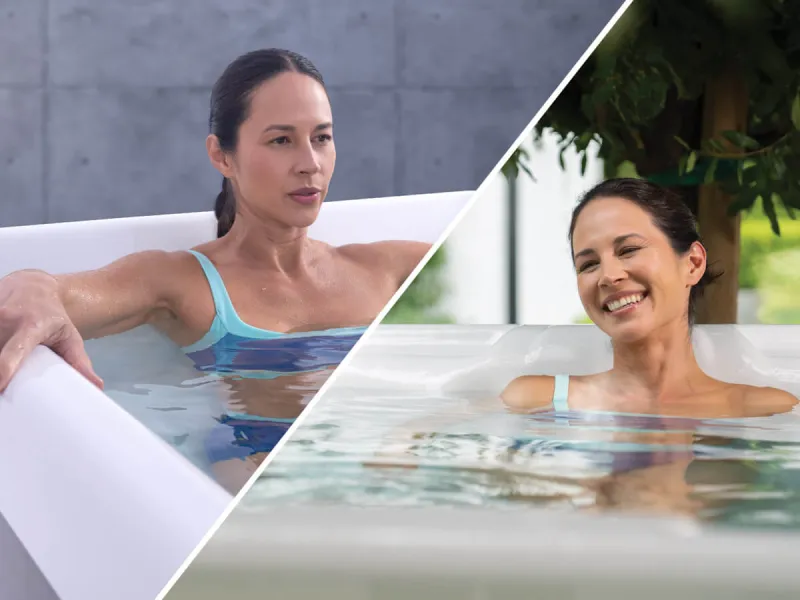
Photo: contrast water therapy hot cold pool Eastern European spa wellness, via www.hotspring.com
American wellness culture loves a good discovery. Cold plunges, infrared saunas, float tanks — we embrace these things with enormous enthusiasm once they hit mainstream awareness. But here's the thing: many of the water-based therapies now trending in US spas and wellness centers aren't new at all. They've been practiced for generations across Bulgaria, Hungary, Czech Republic, and other parts of Eastern Europe, refined over centuries in public bathhouses, mountain spring resorts, and traditional healing centers.
At AquaLife Bulgaria, we see this convergence happening in real time. American visitors come to experience our therapeutic water programs and leave saying, "Why don't we have this at home?" The good news is — increasingly, you do. Here are five Eastern European aquatic healing techniques that are gaining serious traction in the US, where they come from, what science says about them, and how to get started.
1. Contrast Water Therapy: The Hot-Cold Cycle That Wakes Up Your Whole System
Where it comes from: Contrast bathing has deep roots across the Balkan and Central European spa traditions. Bulgarian public baths (known as bani) historically featured separate hot and cold pools, and bathers would move between them in deliberate cycles. Similar practices existed in Czech and Hungarian bathhouses, where the alternating temperature protocol was considered essential — not optional — to the full therapeutic sequence.
What it involves: The basic principle is straightforward: alternate between hot water immersion (around 100–104°F) and cold water immersion or showering (around 55–65°F) in timed intervals. A typical session might run three to five cycles of three minutes hot, one minute cold, always ending with cold.
What the science says: Contrast therapy triggers what researchers call "vascular gymnastics" — the repeated dilation and constriction of blood vessels acts like a pump for circulation, flushing metabolic waste and delivering oxygenated blood to tissues. A 2013 study in the Journal of Athletic Training found contrast water therapy significantly reduced delayed-onset muscle soreness compared to passive rest. More recent research has highlighted its positive effects on lymphatic circulation, immune response, and even mood regulation through cold-induced endorphin release.
How to try it: You don't need a fancy facility. Your shower works fine. Start with two minutes of comfortably hot water, then shift to the coldest setting you can tolerate for 30 seconds. Repeat three times. Build up gradually — the cold gets easier, and the post-session energy boost is real. If you have access to a gym with a hot tub and cold plunge, that's even better for full-body immersion.
2. Herbal Water Immersion: Bulgaria's Botanical Pharmacy in Bath Form
Where it comes from: Bulgaria's Rhodope and Balkan mountain regions are extraordinary repositories of medicinal herbs — thyme, yarrow, St. John's wort, Bulgarian rose, lavender, and dozens of others have been used in healing baths for as long as anyone can document. Traditional Bulgarian healers (called bilkari, or herb specialists) prescribed specific herbal combinations for different conditions, and immersion in herb-infused water was a primary delivery method.
What it involves: Strong herbal infusions — essentially very concentrated teas — are added to warm bathwater. The skin, being the body's largest organ, absorbs some of the bioactive compounds, while steam inhalation delivers others to the respiratory system. Different herbs serve different purposes: lavender and chamomile for relaxation, rosemary and peppermint for circulation, yarrow and calendula for skin inflammation.
What the science says: Transdermal absorption of plant compounds is an active area of research. Studies have confirmed that certain volatile oils and flavonoids can cross the skin barrier, particularly when pores are opened by warm water. A 2019 review in Phytotherapy Research highlighted balneological use of herbal preparations as showing genuine efficacy for skin conditions, musculoskeletal pain, and psychological stress. Bulgarian rose extract, specifically, has demonstrated anti-inflammatory and antioxidant properties in multiple studies.
How to try it: Brew a very strong herbal tea — use three to four times the normal amount of dried herb — steep for 15–20 minutes, strain, and pour the liquid into your bath. Bulgarian rose water (available at many Middle Eastern grocery stores and online) can be added directly. Start with single herbs before experimenting with combinations, and do a small skin patch test first if you have sensitive skin.
3. Hydrostatic Pressure Therapy: The Healing Force You Don't Even Notice
Where it comes from: This one's a bit less visible as a named tradition, but it's baked into the design of Eastern European therapeutic pools, which tend to be deep enough for full-body submersion and specifically used for therapeutic movement and passive immersion — not just leisure swimming. Bulgarian mineral bath resorts, particularly those catering to people with joint and mobility conditions, have long incorporated structured immersion protocols that take advantage of water's physical pressure properties.
What it involves: Simply being submerged in water up to chest depth means your body is experiencing hydrostatic pressure — water pushing evenly against your skin and underlying tissues from all directions. This isn't something you need to actively do; it's physics working on you automatically.
What the science says: Hydrostatic pressure has well-documented therapeutic effects. It reduces peripheral edema by mechanically encouraging fluid back into the venous and lymphatic systems. It stabilizes joints by providing external support, allowing people with arthritis or hypermobility to move more freely and with less pain. Research in Archives of Physical Medicine and Rehabilitation has shown significant improvements in pain, function, and quality of life for osteoarthritis patients following aquatic therapy programs that leverage hydrostatic principles.
How to try it: A standard bathtub offers some hydrostatic benefit, but the effect scales with depth and coverage. If you have access to a community pool or aquatic therapy center, try standing in chest-deep water for 15–20 minutes, gently moving your arms and legs. Many YMCAs and community recreation centers now offer aquatic therapy classes — these are often underutilized and surprisingly affordable.
4. Mineral Salt Flotation: Eastern Europe's Answer to Sensory Reset
Where it comes from: The concept of floating in high-salinity water for therapeutic benefit has strong Eastern European cultural roots, connected to both natural saline lakes (Bulgaria has several) and the therapeutic use of concentrated mineral brine in spa settings. The Dead Sea gets most of the press, but saline lake bathing has been practiced in Bulgaria's Black Sea coastal region and inland mineral lakes for generations.
What it involves: Modern float tanks (sensory deprivation tanks) use 800–1,000 pounds of Epsom salt dissolved in water to create an environment where the body floats effortlessly. Traditional Eastern European versions were less controlled but shared the core principle: high-salinity water that eliminates the physical effort of staying afloat, allowing complete muscular release.
What the science says: Float therapy research has expanded significantly in the past decade. A 2018 study published in PLOS ONE found that a single 60-minute float session produced significant reductions in anxiety, stress, muscle tension, and pain, with effects lasting days afterward. The magnesium absorbed through the skin during flotation appears to contribute meaningfully to the muscle-relaxing effect. Researchers at Laureate Institute for Brain Research have been exploring flotation as a treatment for anxiety disorders with promising early results.
How to try it: Float centers have proliferated across the US in the past five years — there's likely one within reasonable distance of most major cities. Search "float therapy" or "sensory deprivation tank" near you. Sessions typically run 60–90 minutes. If you want a home approximation, a full bath with two cups of Epsom salt and a darkened, quiet bathroom gives you the mineral and relaxation benefits, if not the full flotation effect.
5. Kneipp Hydrotherapy: The Step-by-Step Water Cure Making a Comeback
Where it comes from: Though technically developed by Bavarian priest Sebastian Kneipp in the 19th century, his methods spread rapidly through Central and Eastern Europe and became deeply integrated into Bulgarian and Czech spa culture. Many Bulgarian spa facilities still offer structured Kneipp programs, and the tradition has been continuously practiced in these regions when it largely faded from American awareness.
What it involves: Kneipp hydrotherapy is a systematic program combining water applications of varying temperatures, medicinal herbs, physical movement, nutrition, and balanced living. Therapeutically, it's best known for its water applications: arm baths, foot baths, affusions (water poured over specific body parts), and alternating compress treatments. It's precise, intentional, and designed to stimulate specific physiological responses.
What the science says: Kneipp methods have been studied extensively in European medical literature. A 2017 systematic review in Forschende Komplementärmedizin found strong evidence for Kneipp hydrotherapy's effectiveness in treating chronic venous insufficiency, with good evidence for applications in stress management and sleep disorders. The alternating temperature applications appear to be the key mechanism, training vascular response and improving autonomic nervous system regulation over time.
How to try it: The simplest Kneipp technique is the contrast foot bath. Fill two basins — one with hot water (around 104°F), one with cold (around 59°F). Soak feet in hot for three minutes, then cold for one minute. Repeat three to four times, ending with cold. Do this daily for two to three weeks and notice the difference in circulation, energy levels, and even sleep quality. Some US naturopathic clinics and integrative health centers now offer formal Kneipp protocols — worth asking about.
The Bigger Picture
What ties all five of these techniques together isn't just water — it's a philosophy. Eastern European wellness traditions, particularly those rooted in Bulgarian spa culture, have always treated water as medicine: something to be used thoughtfully, consistently, and with respect for what the body actually needs.
American wellness is catching up, and that's genuinely exciting. But you don't have to wait for your local gym to install a contrast plunge pool or your spa to start offering Kneipp programs. Start with what you have. A bathtub, some mineral salts, a handful of dried herbs, and twenty minutes of actual quiet can begin shifting how your body feels — today.
That's the AquaLife Bulgaria approach: ancient wisdom, modern understanding, and the belief that water, used well, is one of the most powerful healing tools we have.