Bulgarian Mountain Springs vs. Your Home Ice Bath: Why Nature Wins the Cold Therapy Battle
Let's be honest — the home ice bath has had a serious moment. Between influencer plunge tubs and $5,000 cold-therapy pods showing up in suburban garages across the US, cold-water immersion has gone from niche athletic recovery hack to full-blown wellness obsession. And the science backing it up is real: cold exposure reduces inflammation, spikes norepinephrine, and builds mental resilience.
But here's what the wellness industry isn't telling you: the water you're sitting in matters just as much as the temperature. And when you stack a commercial ice bath against the mineral-rich, glacially fed springs tucked into Bulgaria's Rhodope and Rila mountain ranges, the comparison starts to look a little one-sided.
What's Actually in That Ice Bath Water?
When you fill a home plunge tub with tap water and a bag of ice from the gas station, you're working with what's essentially a blank canvas. Cold, yes. Therapeutic in a general sense, absolutely. But stripped of the naturally occurring minerals, dissolved gases, and microbial ecosystems that make wild water genuinely alive.
Municipal tap water in most American cities is treated with chlorine and fluoride — necessary for safety, but not exactly a cocktail designed for cellular recovery. You're getting the cold stimulus. That's it.
Bulgaria's alpine springs tell a completely different story.
The Mineral Profile That Changes Everything
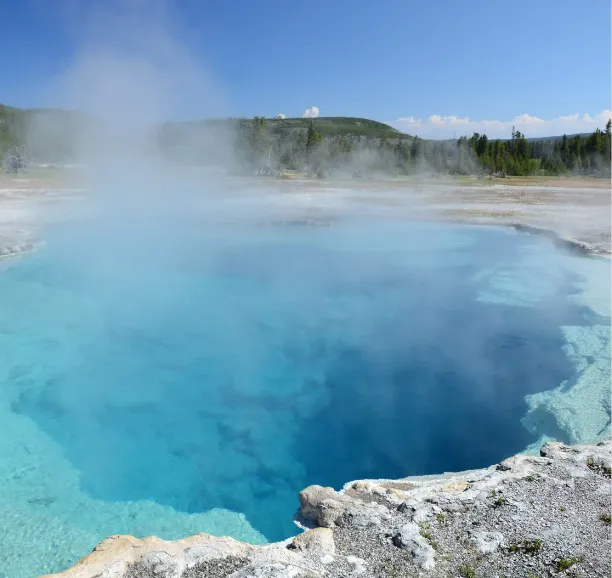
The springs flowing through Bulgaria's mountain regions have been filtering through layers of granite, limestone, and volcanic rock for thousands of years. By the time that water reaches the surface, it's carrying a sophisticated load of dissolved minerals — magnesium, calcium, silica, bicarbonates, and trace elements like lithium and strontium that most Americans have never even heard of in a wellness context.
Magnesium alone is worth paying attention to. Studies published in journals like Nutrients have linked transdermal magnesium absorption — meaning through the skin — to reduced muscle soreness, improved sleep quality, and lower cortisol levels. When you're soaking in magnesium-rich spring water, your body may be doing more than just responding to the cold shock. It may be absorbing what it needs to recover.
Calcium and bicarbonate ions, meanwhile, play a role in buffering lactic acid — the compound responsible for that burning sensation in your muscles after a hard workout. Natural spring water with high bicarbonate content essentially gives your body a chemistry assist that filtered tap water simply cannot.
"The mineral composition of these springs isn't random — it's the result of geological processes that have been running for millennia," says Dr. Elitsa Georgieva, a Bulgarian balneologist (that's a physician who specializes in therapeutic bathing) who has worked with international athletes at wellness centers in the Rila region. "When we talk about the healing properties of mineral water, we're talking about a complex interaction between the body and a living ecosystem. You can't bottle that, and you certainly can't recreate it in a plastic tub."
Altitude Adds a Layer Your Garage Can't Replicate
Here's something the cold-plunge influencers rarely mention: altitude changes the therapeutic equation in meaningful ways.
Many of Bulgaria's most celebrated springs sit at elevations between 3,000 and 7,000 feet. At altitude, the air is thinner, oxygen partial pressure drops, and your body's physiological response to cold exposure intensifies. The cardiovascular system works harder, red blood cell production gets a nudge, and the overall hormetic stress — that productive, adaptation-triggering discomfort — runs deeper than it would at sea level.
For athletes and biohackers chasing performance gains, this altitude-cold combination is essentially a natural stacking protocol. You're getting cold-shock protein activation, potential hypoxic adaptation, and mineral absorption all at once. No subscription required.
Why American Biohackers Are Booking Flights to the Balkans
The wellness travel market is shifting. While Scandinavian ice swimming and Japanese forest bathing have already made their way into the American cultural conversation, Bulgaria is starting to show up on the radar of a more discerning crowd — people who've already maxed out their home recovery setups and are looking for the next edge.
Jared M., a 38-year-old software engineer from Austin who describes himself as a "semi-serious biohacker," spent two weeks at a Bulgarian mountain wellness retreat last year after reading about the country's thermal spring tradition. "I've done the Wim Hof stuff, I own a cold plunge, I've tried everything," he says. "But getting into a natural spring at altitude, with actual minerals in the water, surrounded by mountains — it hit differently. My recovery metrics were noticeably better. My HRV improved within days."
His experience lines up with what practitioners at AquaLife Bulgaria have been observing for years: guests who come in expecting a spa vacation often leave describing something that felt more like a biological reset.
The Psychological Dimension of Wild Water
There's also a psychological component that no home setup can fully compete with. Research in environmental psychology consistently shows that natural settings — particularly those involving moving water, open sky, and green landscapes — reduce cortisol and activate the parasympathetic nervous system more effectively than indoor environments.
When you're submerged in a cold mountain spring with pine forest on the hillside and the sound of running water in your ears, your nervous system registers something different than when you're in a garage staring at a concrete wall. The cold is the same. The nervous system response is not.
So Should You Ditch the Ice Bath?
Not necessarily. Cold-water immersion at home is still genuinely valuable, and we'd never tell you to sell the plunge tub. But it's worth understanding what you're getting — and what you're missing.
If you're serious about cold therapy as a recovery and longevity tool, experiencing a natural mineral spring at least once isn't just a travel splurge. It's a reference point. It calibrates your understanding of what water can actually do for the human body when it hasn't been processed, treated, or temperature-controlled into submission.
Bulgaria's mountain springs have been doing this work quietly for centuries. The science is finally catching up — and so are the Americans.