Why Warm Water Wins: The Case for Sustained Thermal Immersion Over Hot-Cold Shock Therapy
Anywhere you look in American wellness right now, someone is jumping into cold water. Ice baths, cold plunges, cryotherapy chambers — contrast therapy has become the go-to biohack for athletes, executives, and anyone who follows a fitness influencer. The pitch is simple: shock your system, trigger adaptation, come out stronger.
And look, there's real science behind cold exposure. We're not dismissing it. But here's what the contrast therapy conversation consistently misses: the autonomic nervous system doesn't just respond to intensity. It responds to precision. And for a growing number of people — especially those dealing with burnout, chronic stress, anxiety, or adrenal fatigue — adding more physiological shock to an already overstimulated system isn't recovery. It's just more stress with better branding.
Bulgarian thermal spa protocols take a fundamentally different approach, and the nervous system science behind it is worth understanding.
Two Branches, One Body
Your autonomic nervous system has two primary operating modes. The sympathetic branch is your gas pedal — it activates in response to stress, cold, danger, or intense exercise. Heart rate climbs. Blood vessels constrict. Cortisol and adrenaline flood your system. This is useful when you need it. It's damaging when it never fully turns off.
The parasympathetic branch is your brake. It governs rest, digestion, cellular repair, and the kind of deep recovery that actually rebuilds you. Most people in modern American life — juggling work stress, poor sleep, overscheduled days, and constant digital stimulation — are chronically parked in sympathetic overdrive. Their brake barely functions.
Contrast therapy (alternating hot and cold) does activate the parasympathetic system, but it does so through a specific mechanism: the shock of cold water triggers a strong sympathetic spike, followed by a rebound parasympathetic response. For healthy, well-rested people with robust stress resilience, that cycle can be invigorating. For people who are already depleted, it can feel destabilizing — and physiologically, it often is.
The Bulgarian Thermal Approach
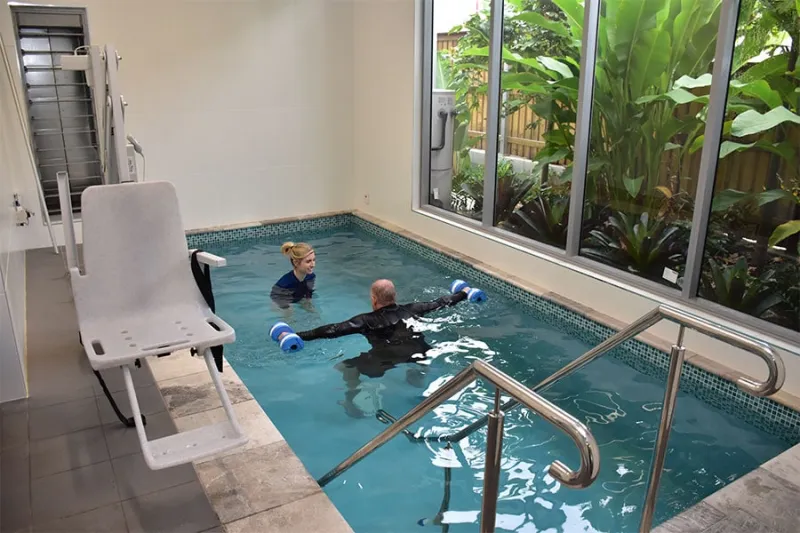
The thermal spa tradition in Bulgaria doesn't rely on shock. It relies on sustained warmth within a therapeutic temperature window — typically between 98°F and 108°F — maintained long enough to produce a direct parasympathetic shift without triggering a prior stress response.
Here's the mechanism: when your body enters warm water at around 100°F to 104°F, thermoreceptors in your skin signal the hypothalamus. Blood vessels dilate. Peripheral circulation increases. Core temperature rises slightly. Heart rate slows. Muscle tension releases. Breathing deepens.
Critically, none of this requires a sympathetic spike first. The warm water doesn't alarm your nervous system — it reassures it. The shift into parasympathetic dominance is direct and gentle rather than reactive.
Bulgarian balneotherapy protocols extend this effect through duration. A standard therapeutic soak at AquaLife Bulgaria runs 20 to 30 minutes at a consistent temperature, often followed by a brief rest period in a warm, low-stimulation environment. That rest phase matters — it allows the nervous system shift to consolidate rather than immediately snapping back to baseline when you step out of the water.
The Temperature Sweet Spot (and Why It's Narrow)
Temperature precision isn't just a detail — it's the whole game. The therapeutic window for parasympathetic activation through warm immersion is actually fairly specific.
Below about 97°F, the water doesn't deliver enough thermal stimulus to meaningfully shift your nervous system state. You'll feel comfortable, but the physiological effect is minimal.
Above about 110°F, the body starts reading the heat as a stressor. Sympathetic activation creeps back in. Heart rate increases. The experience becomes taxing rather than restorative. This is why traditional Bulgarian thermal protocols don't push temperatures to extremes — the goal isn't to endure something. It's to give your nervous system exactly what it needs to let go.
The 100°F to 107°F range is where the magic lives. Warm enough to drive vasodilation and deep muscle relaxation. Cool enough that your body stays in a state of ease rather than alert.
Who This Is Actually For
Contrast therapy has a clear ideal user: someone with a well-regulated nervous system, good baseline stress resilience, and a body that can handle and benefit from repeated sympathetic activation. Think competitive athletes in active training phases, or people in generally good health looking to sharpen their edge.
Sustained thermal immersion is for everyone else — which, honestly, is most of us.
- Burnout and chronic fatigue. When your adrenal system is already running on fumes, adding cold shock is counterproductive. Warm immersion offers recovery without demanding more from a system that has nothing left to give.
- Anxiety and nervous system dysregulation. Cold plunges can trigger panic responses in people with anxiety disorders. The predictable warmth of thermal soaking is far more accessible and often profoundly calming.
- Post-injury and chronic pain. Sustained warmth increases blood flow to damaged tissue and reduces pain signaling in ways that cold therapy simply doesn't replicate for chronic conditions.
- Sleep disorders. The drop in core body temperature that follows a warm bath — as your body works to cool back down after you exit — is one of the most well-documented natural sleep inducers in the scientific literature.
Real People, Real Shifts
Amanda, a 38-year-old teacher from Denver, came to AquaLife Bulgaria after two years of trying everything the wellness internet recommended — cold plunges, breathwork, adaptogens, the works. "I kept waiting to feel the reset everyone talked about," she told us. "Instead I just felt more wired. More like I was always bracing for something."
After three days of twice-daily thermal soaks at our facility, she described something she hadn't felt in years: "I stopped feeling like I needed to be doing something. I just... was."
That shift — from doing to being — is exactly what the parasympathetic nervous system enables when you finally stop fighting it.
Marcus, a 45-year-old software engineer from Austin, had a similar experience. He'd been doing cold plunges for eight months and felt "alert but never actually recovered." Two weeks into a thermal immersion routine (he started replicating it at home using a deep soaking tub at 103°F), his sleep tracker showed a 22% increase in deep sleep stages.
Bringing It Home
You don't need to fly to Bulgaria to start experimenting with this — though the geothermal mineral springs here are genuinely hard to replicate. Here are some practical ways to apply the principles:
At-home thermal soak: Fill your tub to 101°F to 104°F. No cold follow-up. Soak for 20 to 25 minutes. Lie down in a warm room for 10 minutes afterward. Do this consistently before bed for two weeks and track your sleep quality.
Temperature stability matters: Try to maintain the water temperature throughout the soak rather than letting it cool significantly. Add warm water gradually if needed.
Reduce stimulation: No phone. Low or no light. Let your nervous system actually experience the quiet it's being offered.
The Quiet Revolution
Contrast therapy is loud, dramatic, and photogenic. Sustained thermal immersion is none of those things. It doesn't make for great content. Nobody's going viral for calmly soaking in warm water.
But your nervous system doesn't care about your content calendar. It cares about signals — and the signal that sustained warmth sends is one of the oldest, most deeply encoded messages in human biology: you are safe, you can rest, you can heal now.
Bulgaria has been sending that message through its thermal springs for thousands of years. Maybe it's time more Americans started listening.