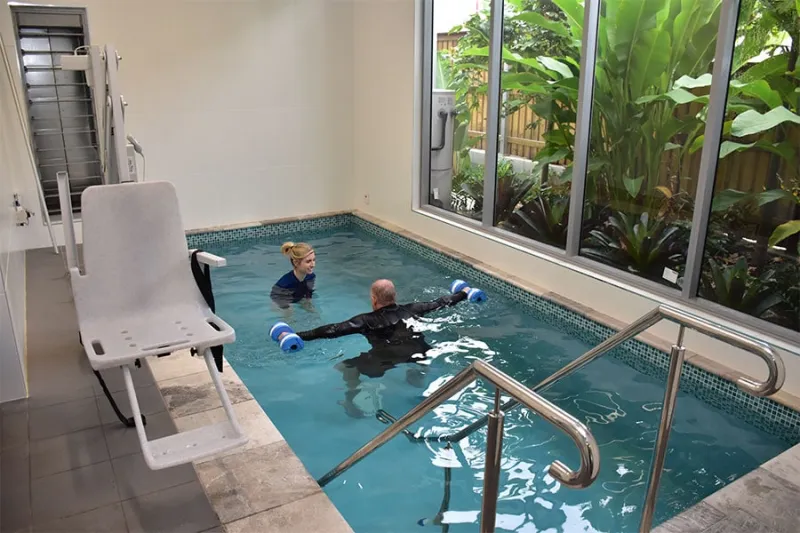
Water Over Pills: How Thermal Hydrotherapy Is Quietly Becoming a Go-To for Chronic Pain Patients

When the Standard Playbook Stops Working
Ask anyone living with fibromyalgia, rheumatoid arthritis, or the grinding aftermath of a serious injury what the past few years have looked like, and you'll hear a version of the same story. Medications that help for a while, then don't. Side effects that create new problems. A medical system that's great at managing acute crises but struggles with the slow, complicated reality of chronic pain.
The opioid crisis didn't happen in a vacuum. It happened, in part, because chronic pain patients were desperate for relief and the tools available to them were limited. Now, as prescribing practices tighten and patients increasingly seek non-pharmaceutical options, something interesting is happening in integrative medicine clinics across the country: water is making a comeback.
Not just any water. Structured, temperature-controlled, mineral-rich aquatic therapy — some of it drawing directly from protocols refined over centuries in Bulgaria's thermal bathing culture — is finding its way into pain management programs at clinics from Colorado to North Carolina.
What Integrative Practitioners Are Seeing
Dr. Renata Kovacs, an integrative pain specialist practicing in Asheville, North Carolina, started incorporating aquatic therapy into her practice about four years ago after noticing that her fibromyalgia patients were hitting walls with conventional treatment approaches.
"The challenge with fibromyalgia specifically is that the nervous system is in a state of central sensitization," she explains. "The pain signals are amplified. Standard physical therapy can actually make things worse because the nervous system interprets mechanical stimulus as threat. Warm water changes that dynamic completely. The buoyancy reduces gravitational load, the warmth calms the nervous system's threat response, and you can actually start moving again without triggering a flare."
She's not alone in this observation. The American College of Rheumatology has acknowledged aquatic exercise therapy as a beneficial intervention for both osteoarthritis and fibromyalgia. Physical therapists who specialize in aquatic rehabilitation have long understood what the research is now confirming: for certain types of chronic pain, water is a therapeutic environment that land-based treatment simply cannot replicate.
The Bulgarian Connection
Bulgaria has one of the highest concentrations of mineral thermal springs in Europe — over 500 documented sources — and a balneotherapy tradition that dates back to Roman and even earlier Thracian civilizations. The country's spa medicine infrastructure, developed and systematized through the 20th century, produced a body of clinical practice around using thermal mineral water for specific medical conditions, including musculoskeletal disorders, neurological conditions, and chronic inflammatory diseases.
What's notable about the Bulgarian approach isn't just the use of warm water. It's the specificity. Different springs with different mineral profiles were matched to different conditions. Sulfur-rich waters for joint inflammation. Sodium bicarbonate springs for metabolic and digestive issues. Radon-bearing waters — used carefully and in controlled doses — for certain pain syndromes. This wasn't folk medicine guessing. It was empirical medicine built on generations of observed outcomes.
American practitioners who have studied European spa medicine traditions are increasingly drawing on this framework. The principles translate well: thermal immersion at specific temperatures, mineral content that has documented anti-inflammatory and analgesic effects, and treatment protocols that involve repeated sessions over days or weeks rather than single exposures.
What the Research Shows
The clinical evidence base for hydrotherapy in chronic pain management has been building steadily. A 2018 meta-analysis published in the International Journal of Biometeorology reviewed multiple randomized controlled trials on balneotherapy for musculoskeletal conditions and found consistent improvements in pain scores, functional mobility, and quality of life measures. The effects weren't trivial — they were clinically meaningful improvements that persisted for weeks to months after treatment courses ended.
For arthritis specifically, the mechanisms are fairly well understood. Warm water immersion reduces the viscosity of synovial fluid — the lubricating fluid in joints — making movement easier and less painful. Hydrostatic pressure reduces joint swelling by encouraging lymphatic drainage. The thermal effect dilates blood vessels, improving circulation to inflamed tissues and accelerating the clearance of inflammatory mediators.
For fibromyalgia, the picture is more complex but equally compelling. Studies have shown that regular warm water immersion reduces substance P levels — a neuropeptide associated with pain signal amplification — and increases serotonin availability. It also measurably reduces cortisol and improves sleep architecture, both of which are directly linked to fibromyalgia symptom severity.
Patient Voices
Marcus, a 54-year-old former construction worker from Denver, spent three years cycling through pain medications after a series of back injuries left him with chronic lumbar pain and nerve damage. His physiatrist eventually referred him to an aquatic therapy program.
"I was skeptical at first," he admits. "I figured it was basically just swimming around in warm water, nothing serious. But after the first week of consistent sessions, I was sleeping better than I had in years. The pain didn't disappear, but it became manageable. I could function. That was huge."
His experience isn't unusual. Pain specialists who work with aquatic therapy frequently note that the goal isn't necessarily eliminating pain entirely — it's reducing the pain system's chronic activation enough that patients can re-engage with life, movement, and their own healing process.
Why This Isn't Just a Trend
Skepticism about non-pharmaceutical pain interventions is understandable. The wellness industry has oversold plenty of things. But aquatic therapy sits on a different foundation. It's not a supplement with questionable bioavailability or a device with no clinical backing. It's a physiologically coherent intervention with a documented mechanism of action, a substantial evidence base, and a track record in European clinical medicine stretching back decades.
The Bulgarian model adds another dimension: the role of mineral content in therapeutic water. Most American aquatic therapy programs use standard pool water. The gap between that and a naturally mineralized thermal spring is significant, both in terms of the minerals available for transdermal absorption and the absence of chlorine's disruptive effects on the skin and nervous system.
As more US practitioners look for tools that actually work for chronic pain without the dependency risks and side effects of long-term opioid use, the case for structured thermal hydrotherapy — informed by traditions like Bulgaria's — is only going to get stronger. Sometimes the most forward-looking medicine is the kind that remembers what worked before we forgot to pay attention.