Stop Slathering and Start Soaking: What Bulgarian Thermal Water Does for Your Skin That No Cream Ever Could

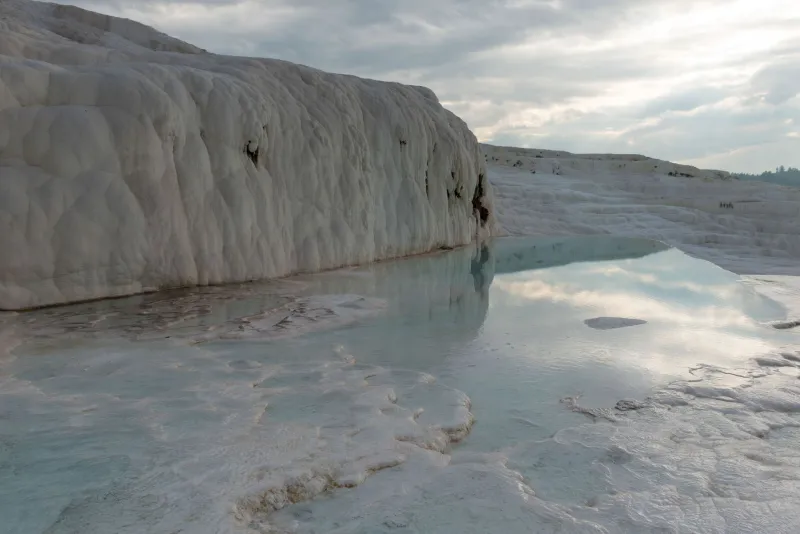
Photo by Photo by Ayla Meinberg on Unsplash on Unsplash
The Moisturizer Trap Nobody Talks About
Walk into any Target or Sephora and you'll find an entire aisle dedicated to fixing your skin. Serums, toners, exfoliants, retinols, SPFs layered over SPFs. Americans spend over $20 billion a year on skincare products, and yet dermatologists are seeing more cases of sensitized, reactive, and barrier-damaged skin than ever before.
That's not a coincidence. That's a pattern.
Here's the uncomfortable truth: a lot of conventional skincare routines are actually making the problem worse. The very products marketed to hydrate and protect your skin are, in many cases, disrupting the delicate ecosystem that keeps it healthy in the first place.
At AquaLife Bulgaria, we've spent years watching something different happen — people with chronically dry, irritated, or reactive skin arriving at our thermal wellness center and leaving with a quiet glow they haven't had in years. Not because of a new product. Because of water.
What Your Skin Barrier Actually Is (And Why It's Struggling)
Your skin barrier — technically the stratum corneum — is a thin, lipid-rich layer that sits at the surface of your skin. Think of it like a brick wall: skin cells are the bricks, and natural oils, ceramides, and fatty acids are the mortar holding everything together.
When that mortar gets stripped away — by over-cleansing, harsh exfoliants, alcohol-based toners, or even the wrong pH in your water — the wall starts to crumble. Moisture escapes. Irritants get in. Inflammation follows. And then, in an attempt to fix it, most people reach for more products, which can continue the cycle.
"I see patients who are using twelve different products and their skin is angrier than ever," says Dr. Elena Kostadinova, a dermatologist and wellness advisor who works with thermal spa practitioners in Bulgaria's Velingrad region. "The skin doesn't need more intervention. It needs a chance to recalibrate."
That recalibration is exactly what Bulgarian thermal water provides.
The Ionic Difference: Why Mineral Composition Matters
Not all water is created equal — and when it comes to skin, the difference is significant. The tap water in most American cities is treated with chlorine and often has a pH that's slightly alkaline, both of which can disrupt the skin's naturally acidic mantle (which sits around pH 4.5 to 5.5).
Bulgarian thermal springs, by contrast, carry a mineral profile that's been shaped by millions of years of geological filtration. Waters from regions like Velingrad, Sapareva Banya, and Bankya are rich in silica, sulfur, calcium, magnesium, and bicarbonates — in concentrations and ionic forms that interact directly with skin tissue.
Silica, in particular, is a standout. Research has shown that silica-rich water can support collagen synthesis and help reinforce the skin's structural proteins. Sulfur compounds have long been used in dermatology for conditions like eczema, psoriasis, and acne. Magnesium helps regulate inflammation. And the slightly acidic pH of many Bulgarian thermal waters aligns naturally with the skin's own chemistry — meaning it supports rather than disrupts the acid mantle.
This isn't a cosmetic trick. It's chemistry.
Soaking vs. Applying: Why the Delivery Method Changes Everything
Here's what most skincare brands won't tell you: topical absorption is limited. Your skin is designed to keep things out, not let them in. Slathering magnesium oil or a ceramide cream on the surface can offer some benefit, but it's working against your skin's primary function.
Immersion is different. When you soak in mineral-rich thermal water, you're creating a sustained, full-body environment where the skin can absorb minerals through osmotic pressure, where temperature opens the pores gently, and where the nervous system relaxes enough to let the body direct resources toward repair.
A 20-minute soak in Bulgarian thermal water isn't a beauty treatment in the traditional sense. It's closer to a physiological reset.
"When I started recommending thermal soaks to patients with chronic skin conditions, I was skeptical," admits Dr. Kostadinova. "But I kept seeing results that topical treatments weren't producing. Less redness, less reactivity, a more resilient barrier over time. The skin was behaving like it had been given permission to heal."
How to Build a Simpler Routine Around Thermal Immersion
If you can't hop on a plane to Bulgaria tomorrow (though we'd love to see you here), there are still ways to move toward this philosophy at home — and a few principles worth adopting right now.
1. Simplify before you add. If your routine has more than five products, consider stripping it back. The fewer disruptions to your barrier, the better chance it has to rebuild.
2. Check your water. Invest in a simple shower filter to remove chlorine. It won't replicate Bulgarian spring water, but it removes one of the most common barrier disruptors.
3. Mind your temperature. Hot showers feel great but strip natural oils. Lukewarm water — especially for face washing — is gentler on the acid mantle.
4. After immersion, seal gently. If you do have access to thermal water (some Bulgarian-sourced mineral waters are available in spray form internationally), apply a light, ceramide-based moisturizer within a few minutes of soaking to lock in what the water delivered.
5. Plan a source visit. There's genuinely no substitute for direct immersion in a natural thermal spring. What we offer at AquaLife Bulgaria isn't just a spa experience — it's a return to the most elemental form of skin care humans have ever known.
The Bigger Picture
The global skincare industry is brilliant at creating problems and selling solutions. Bulgarian thermal bathing tradition, which stretches back to the Thracians and Romans who built their wellness rituals around these same springs, never needed that model.
Healthy skin, in the Bulgarian wellness tradition, isn't something you purchase. It's something you maintain through consistent, gentle, mineral-rich water contact — and by trusting your body's own ability to regulate and repair when you stop interfering.
Your skin barrier isn't broken beyond fixing. It's just waiting for the right environment to do what it was always designed to do.