Your Gut Has Been Missing Something — And It Might Be Mineral Thermal Water
The Gut-Water Connection Nobody's Talking About
Walk into any Whole Foods in America and you'll find an entire wall dedicated to gut health — probiotic capsules, fermented drinks, prebiotic fiber powders. We've collectively decided the microbiome matters, and the supplement industry is making billions off that realization. But here's what most people haven't considered: the water you're exposed to — not just what you drink, but what your skin absorbs — may be doing something to your internal microbial ecosystem that no capsule can replicate.
Emerging research in environmental microbiology and dermal absorption science is starting to paint a fascinating picture. And Bulgaria's naturally occurring thermal springs, with their unusually complex mineral compositions, are showing up in that picture in some pretty compelling ways.
What Chlorinated Water Is Actually Doing to Your Body
Let's start with the water most Americans spend the most time in: chlorinated pools, treated municipal tap water, and standard hotel hot tubs. Chlorine is effective at killing pathogens — that's not in dispute. But the same antimicrobial properties that make it useful for water sanitation don't conveniently stop working when they hit your skin.
Research published in environmental health journals has documented that chlorine and chloramine compounds — the disinfection byproducts in treated water — can disrupt the skin's surface microbiome. The skin isn't just a passive barrier. It hosts billions of microbial organisms that communicate with the immune system, regulate inflammation, and even interact with the gut-skin axis, a bidirectional communication pathway that researchers are only beginning to understand.
Frequent exposure to heavily chlorinated water has been associated with reduced microbial diversity on the skin's surface. And reduced microbial diversity, whether on the skin or in the gut, is increasingly linked to inflammatory conditions, autoimmune disorders, and metabolic dysfunction.
This doesn't mean you should stop showering. But it does raise an important question: what happens when you replace that chlorinated exposure with something fundamentally different?
Bulgaria's Thermal Waters Are Biologically Alive in a Way Treated Water Isn't
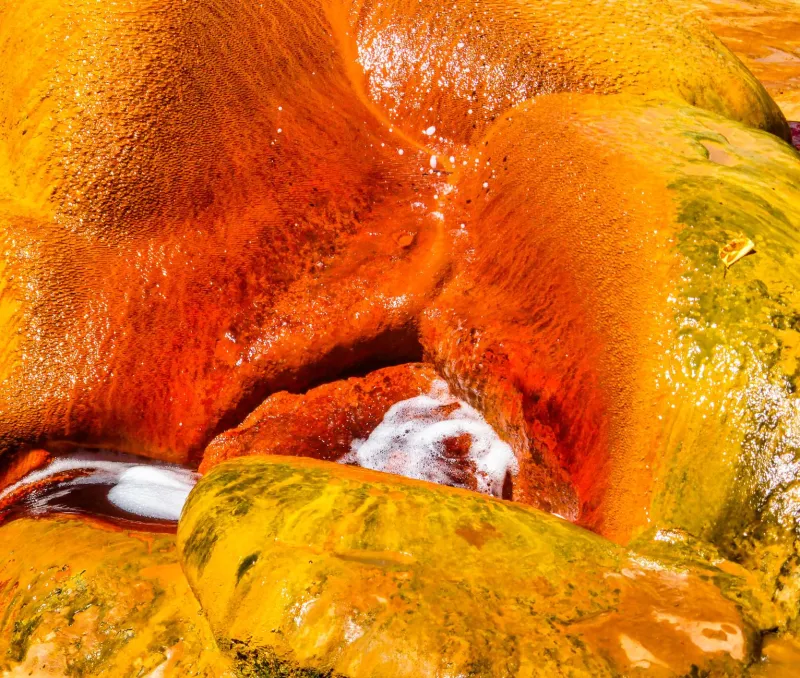
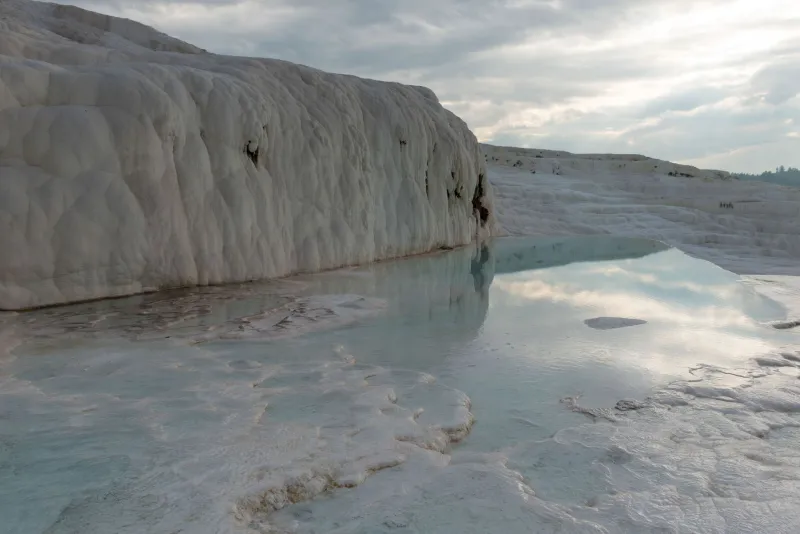
The thermal springs scattered across Bulgaria — particularly those in the Rhodope Mountains, the Sofia region, and the Rupite area — emerge from deep geological formations where water has been slowly filtering through mineral-rich rock for thousands of years. What comes out isn't just hot water. It's a complex solution of silica, sulfur, calcium, magnesium, sodium bicarbonate, and trace elements like lithium, strontium, and fluoride, all in naturally occurring ratios that synthetic mineral water can't easily replicate.
Here's where it gets interesting from a microbiome perspective. Some Bulgarian thermal springs contain naturally occurring thermophilic microorganisms — heat-adapted bacteria and archaea that thrive in warm mineral environments. These aren't pathogens. They're ancient microbial life forms that have coexisted with humans throughout our evolutionary history. Traditional bathing cultures across the globe — from Japan's onsen to Iceland's geothermal pools to Bulgaria's own balneotherary traditions — have involved regular exposure to these kinds of naturally mineralized, microbiologically alive water environments.
The contrast with a chlorinated pool couldn't be starker. One environment is deliberately sterilized. The other is a living mineral ecosystem.
Minerals, Skin Permeability, and the Gut Connection
Skin absorption of minerals during thermal bathing is a documented phenomenon, though researchers are still mapping its full scope. Magnesium, for instance, is notoriously difficult to absorb through the digestive tract in supplement form — many people experience GI distress trying to hit therapeutic magnesium doses orally. Transdermal absorption through mineral-rich bathing, however, bypasses the digestive system entirely.
Magnesium plays a direct role in gut function. It regulates smooth muscle contractions in the intestinal wall, supports the mucosal lining that protects gut bacteria, and modulates the inflammatory signaling pathways that, when dysregulated, contribute to conditions like irritable bowel syndrome and leaky gut.
Sulfur compounds — abundant in many Bulgarian thermal springs — are another piece of this puzzle. Sulfur is a building block for glutathione, the body's master antioxidant, and it plays a role in maintaining the integrity of the intestinal epithelium. There's a reason sulfur-rich mineral waters have been used in European spa medicine for centuries to address digestive complaints. The science is catching up to what practitioners observed empirically long ago.
What Happens After You Soak
The microbiome effects of thermal bathing aren't just happening at the skin surface. The nervous system response to warm mineral immersion — the parasympathetic activation, the cortisol reduction, the vagal tone improvement — has downstream effects on gut function that are well-supported in the literature.
The gut-brain axis is heavily influenced by stress hormones. Chronic cortisol elevation, which is essentially the default state for a significant portion of stressed-out Americans, disrupts the gut microbiome composition, reduces microbial diversity, and compromises the mucosal barrier. Anything that meaningfully lowers chronic stress — and thermal bathing does this through multiple physiological pathways — creates better conditions for a healthy gut ecosystem to thrive.
Bulgarian balneotherapy traditions intuitively understood this long before anyone coined the phrase "gut-brain axis." The practice of extended, regular soaking in mineral springs wasn't just about muscle relaxation. It was a whole-body reset that happened to benefit digestion, mood, and long-term resilience simultaneously.
Bringing This Home
Most Americans aren't going to have access to a Bulgarian thermal spring on a Tuesday afternoon. But understanding this science can shift how you think about water and wellness in practical ways.
If you can access a natural mineral spring — even a modest one — prioritize it over a chlorinated alternative when the choice exists. If you're a regular pool swimmer, consider offsetting chlorine exposure with magnesium-rich Epsom salt baths at home. And if you're serious about gut health, look beyond the supplement shelf. The environment your skin lives in matters. The minerals your body absorbs transdermally matter. The stress levels that govern your gut microbiome's daily conditions matter.
Bulgaria's thermal water culture didn't emerge by accident. It emerged because generations of people noticed that regular mineral water immersion made them feel fundamentally better — in their digestion, their energy, their resilience. The science is now giving us the vocabulary to explain why. And that's a pretty good reason to start thinking about water differently.