The Goldilocks Zone of Recovery: Why 37–42°C Is the Temperature Range Your Body Has Been Waiting For

The Extremes Are Getting All the Attention
Open Instagram on any given morning and you'll find someone dunking themselves into a 50-degree ice barrel in the name of recovery, mental toughness, or longevity. Scroll a little further and there's someone else sitting in a 200-degree sauna, sweating through what they're calling a "cellular reset." Both have passionate advocates. Both have some legitimate science behind them. And both, in the pursuit of dramatic results, may be overshadowing something more quietly powerful.
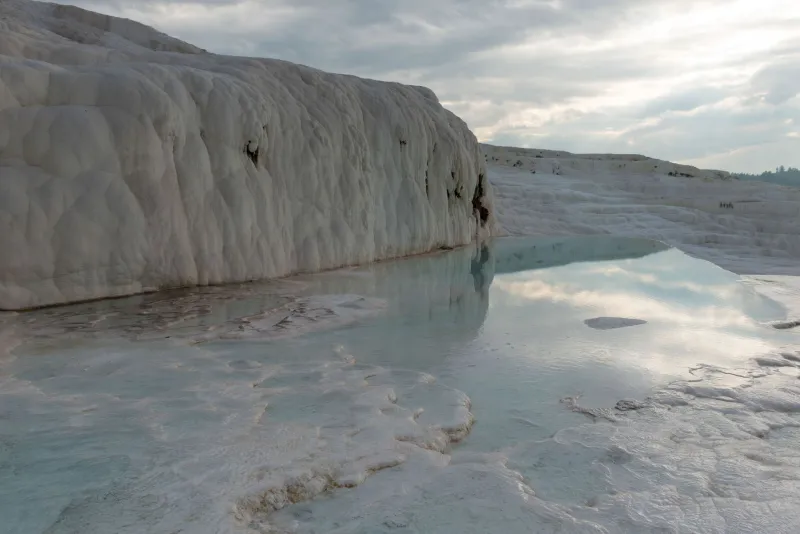
Bulgaria's thermal spring tradition didn't gravitate toward extremes. It gravitated toward a specific range — roughly 37 to 42 degrees Celsius (98.6 to 107.6°F) — that sits right at the intersection of comfort and physiological activation. This isn't a coincidence of geography. It's a window that aligns remarkably well with what modern exercise physiology, cardiovascular research, and inflammation science tell us about how the human body responds to thermal stress.
Why This Temperature Range Is Different
To understand why 37–42°C matters, it helps to think about what your body is actually doing at different temperatures.
At core body temperature (37°C), you're in homeostasis. The body isn't working hard to compensate for thermal stress in either direction. When you immerse in water that matches or slightly exceeds this temperature, something interesting happens: the body doesn't have to fight the environment. It can redirect resources toward repair, circulation optimization, and nervous system regulation.
As water temperature rises toward 40–42°C, you start activating what researchers call a mild hyperthermic response. Core temperature rises slightly. Blood vessels dilate — not just at the surface, but deeper in the musculature and connective tissue. Cardiac output increases moderately. Blood viscosity decreases, meaning blood flows more easily through smaller capillaries. The lymphatic system, which relies partly on muscular contractions and partly on thermal gradients to move fluid, becomes more active.
Critically, at 37–42°C, you're also triggering heat shock protein (HSP) production — a cellular stress response that helps repair damaged proteins, reduces oxidative stress, and has documented anti-inflammatory effects. You get the HSP activation without the cardiovascular strain that comes with more extreme temperatures.
What Ice Does (and Doesn't Do)
Cold water immersion has real applications. For acute injury management — the first 24–48 hours after a muscle strain or joint trauma — cold's vasoconstrictive effects can limit swelling and blunt the initial inflammatory cascade. Nobody's arguing against ice for a freshly sprained ankle.
But the cold therapy trend has extended far beyond acute injury care into general athletic recovery, and the science here is considerably more mixed. A 2021 study in the Journal of Physiology found that regular post-exercise cold water immersion blunted long-term muscle adaptation — essentially interfering with the hypertrophic signaling that makes training effective. Other research has shown that cold immersion reduces mitochondrial biogenesis, the process by which muscle cells build new energy-producing machinery.
For someone training for strength or endurance, routine cold immersion may actually be working against their goals. The discomfort feels productive. The physiology sometimes isn't.
What Extreme Heat Does (and Doesn't Do)
On the other end of the spectrum, high-temperature saunas (80–100°C) do produce meaningful cardiovascular and longevity-associated benefits, particularly with regular, long-term use. The Finnish sauna research is genuinely impressive. But extreme heat also places significant stress on the cardiovascular system, is contraindicated for a substantial portion of the population, and carries real risks if used incorrectly.
More importantly for recovery purposes, extreme heat at sauna temperatures doesn't allow for immersion. You're heating the surface of the body rapidly without the hydrostatic pressure, buoyancy, and mineral contact that water immersion provides. The mechanisms are related but not identical.
The Bulgarian Thermal Window in Practice
Bulgaria's thermal springs naturally cluster in the 37–42°C range — a geological coincidence that turned out to be a therapeutic sweet spot. Springs in Hisarya, Velingrad, and Bankya, among others, emerge at temperatures that require little or no adjustment before therapeutic bathing. The traditional batneotherapy protocols developed around these springs — typically 20–30 minute immersions, repeated daily over a course of several weeks — are calibrated to maximize the beneficial hyperthermic response without crossing into cardiovascular overload.
The mineral content amplifies the thermal effect. Magnesium-rich water, for example, further supports vascular relaxation and reduces systemic inflammation. Bicarbonate-rich springs have a mild vasodilatory effect that complements the thermal dilation already occurring. The combination of the right temperature and the right mineral environment creates a synergistic effect that neither component achieves alone.
The Inflammation Sweet Spot
One of the most clinically significant things happening in the 37–42°C range is the modulation of inflammatory pathways. Chronic low-grade inflammation — the kind driving cardiovascular disease, metabolic syndrome, and most degenerative conditions — is profoundly responsive to thermal therapy in this range.
Research on balneotherapy has consistently shown reductions in inflammatory markers including C-reactive protein, interleukin-6, and tumor necrosis factor-alpha following thermal bathing courses. These aren't marginal reductions. In some studies, they're comparable to pharmaceutical anti-inflammatory interventions, without the side effects.
The mechanism involves multiple pathways: improved circulation clearing inflammatory metabolites, HSP activation reducing oxidative damage, parasympathetic nervous system dominance lowering cortisol-driven inflammation, and direct mineral effects on cellular signaling.
How to Apply This at Home
You don't need to book a flight to Bulgaria to start working with this temperature range. Here's a practical framework:
Standard bath: Fill your tub to 38–40°C (100–104°F). Use a thermometer — most people's intuitive sense of "hot" corresponds to temperatures above this range. Add magnesium sulfate (Epsom salt) at about two cups per standard bath to approximate some of the mineral content found in therapeutic springs. Soak for 20–30 minutes.
Hot tub or spa: If you have access to a hot tub, set the temperature to 38–40°C rather than the typical American default of 102–104°F (which often runs higher than optimal). Lower temperature, longer soak, more benefit.
Timing: For recovery purposes, 60–90 minutes post-exercise is a well-supported window. For sleep improvement and stress reduction, 90 minutes before bed allows core temperature to drop naturally afterward, which is a powerful sleep-onset trigger.
Frequency: Consistency matters more than intensity here. Three to four sessions per week will outperform one extreme session. This is the lesson Bulgarian balneotherapy has always taught: it's a practice, not a single event.
The Takeaway
The wellness world loves a dramatic intervention. Ice baths are dramatic. Extreme saunas are dramatic. But the body doesn't necessarily respond best to drama. It responds to precise, repeated signals that align with its own operating parameters.
At 37–42°C, in mineral-rich water, you're not shocking the system. You're speaking its language. Bulgaria's thermal spring culture figured this out empirically over centuries. The physiology is now explaining exactly why it works — and why this quiet temperature range might be the most powerful recovery tool most Americans have never seriously considered.