Your Melatonin Gummy Is Working Against Biology: The Thermal Reset Your Sleep Actually Needs
The sleep supplement industry is worth billions of dollars and built on a partial truth. Yes, melatonin is involved in sleep. Yes, your body produces it naturally as darkness falls. But here's what the gummy packaging leaves out: melatonin is a signal, not a sedative. And signals only work when the receiver is ready.
For a growing number of Americans with chronic insomnia or disrupted sleep, the receiver — specifically, the body's thermal regulation system — is broken. Or more accurately, it's never been properly engaged in the first place.
Sleep Is a Temperature Event First
This is the part of sleep science that doesn't make it onto wellness TikTok very often, because it's not something you can sell in a bottle.
For sleep onset to occur naturally, your core body temperature needs to drop by roughly 1 to 1.5 degrees Fahrenheit. This cooling is what actually triggers the cascade — melatonin rises, heart rate slows, the prefrontal cortex quiets, and you drift off. It's not a coincidence that sleep happens at night. Your circadian rhythm is partly a thermal rhythm, timed to the body's natural temperature dip in the evening hours.
Here's the problem: modern American life is spectacularly good at disrupting this process. Late-night screen exposure, indoor heating, stress-elevated cortisol (which raises core temperature), alcohol, and sedentary evenings all interfere with the thermal drop that sleep requires. You get into bed, your body hasn't cooled, and no amount of melatonin changes that underlying reality.
The supplement addresses the signal. It ignores the physiology that makes the signal meaningful.
The Paradox That Actually Works
So here's where it gets counterintuitive, and where the Bulgarian thermal tradition comes in.
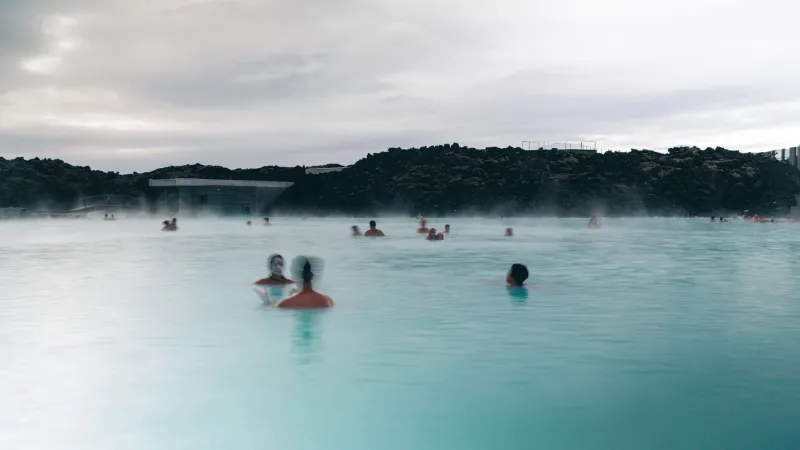
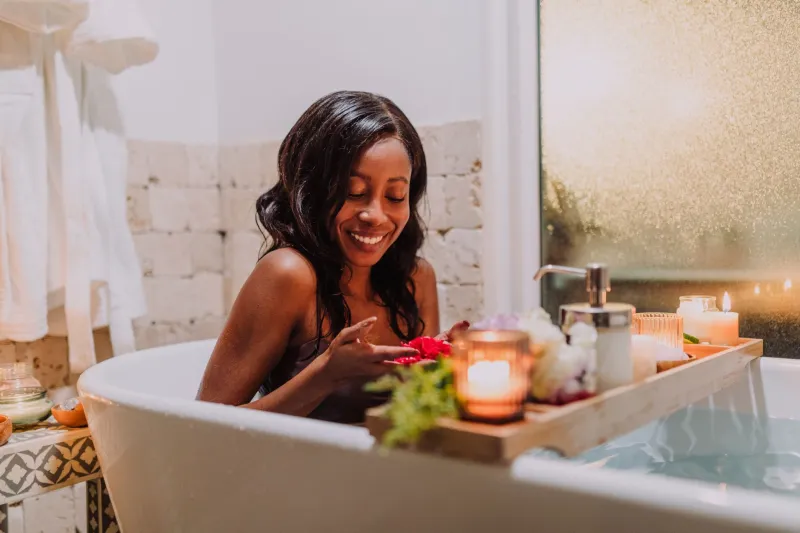
Warming the body before bed — specifically through immersion in warm mineral water at temperatures between roughly 100 and 104°F — triggers a more rapid and pronounced core temperature drop afterward than simply lying in a cool room. This is the thermal paradox of sleep: you heat up to cool down faster.
The mechanism is elegant. When you immerse in warm water, your blood vessels dilate dramatically to push heat toward the skin surface and away from the body's core. When you exit the water and the external heat source is removed, that vasodilation continues for a period — your skin keeps radiating heat, your core temperature drops quickly, and the body interprets this as the evening thermal signal it's been waiting for.
The result is accelerated sleep onset, deeper slow-wave sleep, and fewer nighttime awakenings. Research published in journals covering sleep medicine has repeatedly confirmed this mechanism. It's not alternative medicine. It's thermal biology.
Why Bulgarian Mineral Water Makes This Better
You could, in theory, replicate some of this with a hot bath at home. And honestly, a regular hot bath is already better than most people's current pre-sleep routine. But the Bulgarian thermal mineral water approach adds a layer that plain tap water can't offer.
Mineral-rich thermal water — the kind that surfaces naturally through Bulgaria's extensive spring systems — contains elevated concentrations of magnesium, bicarbonate, and calcium. During a soak, these minerals are absorbed transdermally in small but meaningful amounts. Magnesium in particular has a well-documented relationship with sleep quality: it activates the parasympathetic nervous system, regulates GABA receptors (the same pathway targeted by many pharmaceutical sleep aids), and helps suppress cortisol in the evening hours.
So while the thermal immersion is triggering the temperature cascade, the mineral absorption is simultaneously quieting the nervous system's stress response. It's a two-pronged approach that no pill can replicate, because no pill can replicate what a full-body immersion does to your physiology.
What Insomnia Actually Is (And Isn't)
Chronic insomnia in American adults is frequently described as a psychological problem — anxiety, racing thoughts, hyperarousal. And those things are real contributors. But what often goes unaddressed is that hyperarousal has a physical component: elevated evening cortisol, a body stuck in sympathetic nervous system dominance, and a core temperature that refuses to drop on schedule.
Treating that with a melatonin supplement is like trying to fix a car that won't start by replacing the dashboard lights. The signal system isn't the root problem.
Bulgarian aquatic therapy practitioners have understood this for generations, even if they described it in different terms. The evening thermal soak wasn't just a cultural tradition — it was a physiological intervention, timed to work with the body's natural sleep preparation cycle. The warm water, the mineral content, the transition from immersion to the cooler air — all of it worked in sequence to prepare the body for sleep in a way that felt effortless, because it was working with biology rather than trying to override it.
Building a Pre-Sleep Thermal Protocol
You don't need to be in Bulgaria to start applying this. Here's a basic framework:
Timing: Aim to soak 60 to 90 minutes before your intended sleep time. This gives the thermal drop enough runway to coincide with your bedtime.
Temperature: 100 to 104°F is the sweet spot. Hot enough to trigger meaningful vasodilation, not so hot that it becomes physiologically stressful.
Duration: 20 to 30 minutes is sufficient. You're not trying to cook yourself — you're triggering a vascular response.
Environment after: Keep the room cool. The contrast between the warm soak and a cooler environment amplifies the cooling cascade.
Mineral enhancement: If you have access to genuine mineral water soaking — through a thermal spa or aquatic therapy facility — the magnesium and bicarbonate content adds the nervous system regulation layer that plain water can't provide.
The Bottom Line on Sleep Supplements
Melatonin isn't useless. For jet lag and circadian phase shifts, it has genuine utility. But for the millions of Americans whose sleep is chronically disrupted by thermal dysregulation and nervous system hyperarousal, it's a partial tool being asked to do a complete job.
The body knows how to sleep. It's done it for your entire life. What it needs isn't more supplementation — it needs the right conditions. And chief among those conditions is the thermal signal that says: it's time to cool down, it's time to repair, it's time to rest.
Warm mineral water, used intentionally and timed correctly, delivers that signal in a way that's been working for Bulgarian wellness culture for centuries. The science just took a while to catch up.